


In this article
Introduction
What Exactly Is the EYFS?
Think of the EYFS as the curriculum for under-fives. It sets out:
- What children should be learning at different stages.
- How nurseries and childminders should support that learning.
- The key skills children should develop before starting school.
The EYFS is built around seven areas of learning:
- Communication and Language
- Physical Development
- Personal, Social and Emotional Development
- Literacy
- Mathematics
- Understanding the World
- Expressive Arts and Design
Get Free Personalized Nursery Support
- Find Your Nursery Type
- Find Nearby Nurseries
- Find Funding Eligibility
Find Funding Eligibility
(Coming Soon)
What Changed in the EYFS (and Why)?
The government made updates to the EYFS to reduce paperwork for nurseries and to put more emphasis on children’s outcomes rather than ticking boxes.
Here are the biggest changes that affect your child’s day-to-day experience:
1. Stronger Focus on Language and Communication
- Practitioners now spend more time talking, reading, and singing with children.
- The goal is to build strong vocabulary and communication skills early, which are
linked to success later in life.
For parents, this means you’ll see staff placing extra value on conversation and story time,
not just structured activities.
2. A Push on Early Reading and Maths
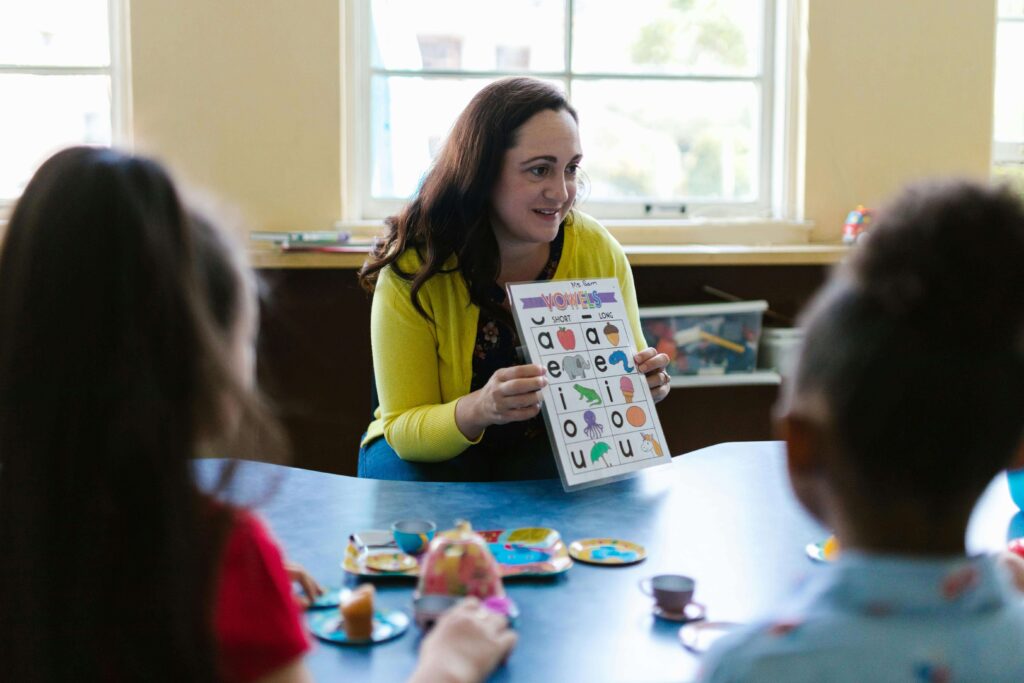
- Literacy goals now focus on phonics and recognising simple words earlier.
- Maths is more about understanding numbers (not just counting by rote) and spotting patterns.
Don’t worry if your child isn’t “reading” at age 4 — the focus is on exposure and confidence, not pressure.
3. Less Paperwork, More Interaction
- Teachers and nursery staff no longer have to document every tiny step in a child’s progress.
- Instead, they’re encouraged to spend more time playing and interacting with children directly.
For you, this means staff may share fewer long written reports, but you’ll notice them being more hands-on with your child.
4. Refreshed Early Learning Goals (ELGs)
- These are the milestones children should reach by the end of reception (age 5).
- Updates were made to make them clearer and less repetitive, with a stronger focus on preparing children for year 1.
For example: more focus on self-regulation (managing emotions) and understanding numbers to 10 securely.
5. Greater Emphasis on Physical Development
- Fine motor skills (like using scissors, holding a pencil, fastening buttons) are now more clearly defined.
- This change recognises that motor skills underpin writing, independence, and confidence.

What Does This Mean for Your Child?
At its heart, the EYFS updates are about giving children more attention, more interaction, and a better balance of skills. For your child, this means:
- More time being listened to, spoken with, and encouraged to use new words.
- A stronger foundation in reading and numbers, taught in a playful way.
- Staff focusing on the “whole child” — their confidence, emotions, and independence, not just academics.
- Practitioners being more present in play, rather than tied up with paperwork.
What Does This Mean for You as a Parent?
As a parent, you’ll notice a few practical differences too:
- Progress updates may look different: You might get fewer long written observations and more verbal feedback at pick-up time.
- Nursery conversations may shift: Practitioners may talk more about language use, vocabulary, and social skills.
- Less “box-ticking”: Don’t be alarmed if you don’t see a folder filled with photos and notes — the focus is now on the quality of interaction, not the quantity of paperwork.
And of course, you can support at home too:
- Talk, sing, and read with your child daily.
- Encourage independence (like dressing, pouring drinks, or tidying up).
- Play simple games with numbers, shapes, or sounds.
These little things make a huge difference.
Why These Changes Matter
Research has shown that children’s vocabulary, confidence, and social-emotional skills at age 5 are strong predictors of how well they’ll do later at school.
By putting more emphasis on communication, self-regulation, and early literacy and maths, the EYFS is aiming to close the gap for children who might otherwise fall behind.
It’s less about pushing children to “achieve more” early, and more about making sure they’ve got the right foundations for school and life.
Key Takeaway
The EYFS updates aren’t about making life harder for parents or nurseries — they’re about making sure children get the attention and support they need to thrive.
For your child, it means:
- More talking, more play, more encouragement.
- Less box-ticking and more meaningful interaction.
- A curriculum that builds the skills that really matter for school readiness.
For you, it means you can feel reassured that nurseries are focusing on what counts most: your child’s learning, confidence, and wellbeing.


John Doe